
Jump to:
Costa Rica is one of the best places in the world to see sloths in the wild. Both two-toed and three-toed sloths live throughout the country’s rainforests but spotting them takes patience. They’re slow-moving, beautifully camouflaged, and spend most of the day completely still in the forest canopy. This guide covers where to find them, the best time to look, and the key things to watch for so you don’t walk right past one.
The Two Sloth Species of Costa Rica
Costa Rica is home to two species of sloths. Knowing the difference helps you identify what you’re looking at and knowing where each species prefers to live helps you find them.
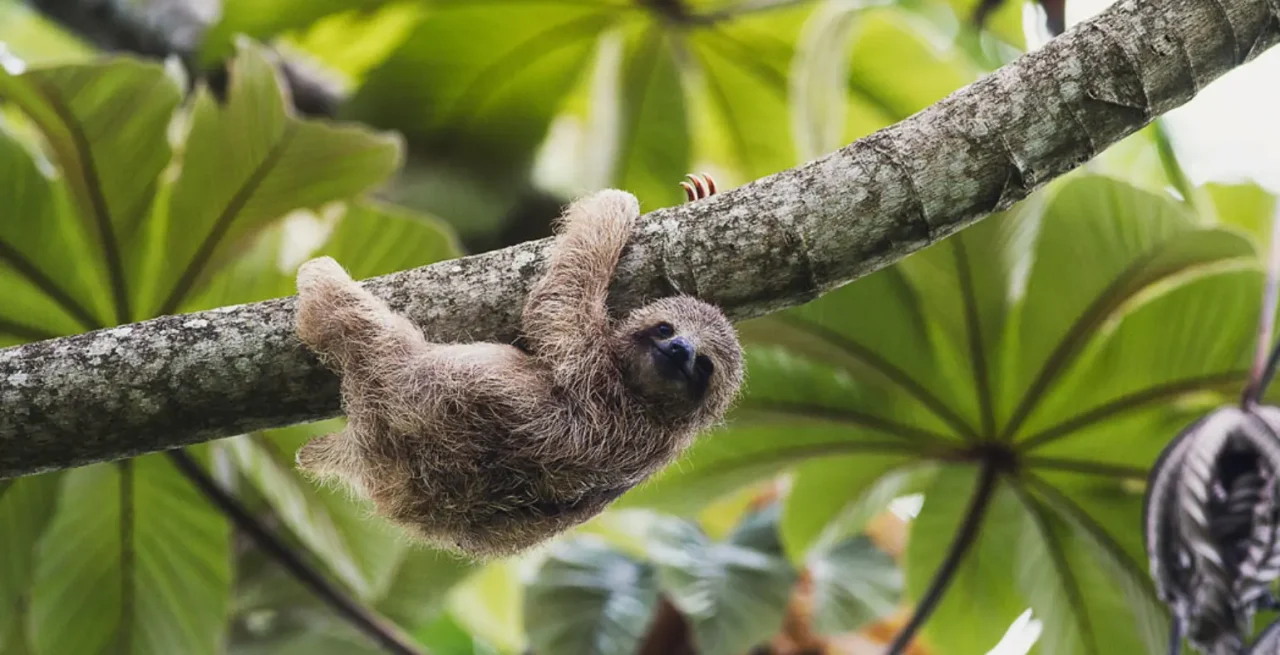
Three-Toed Sloths
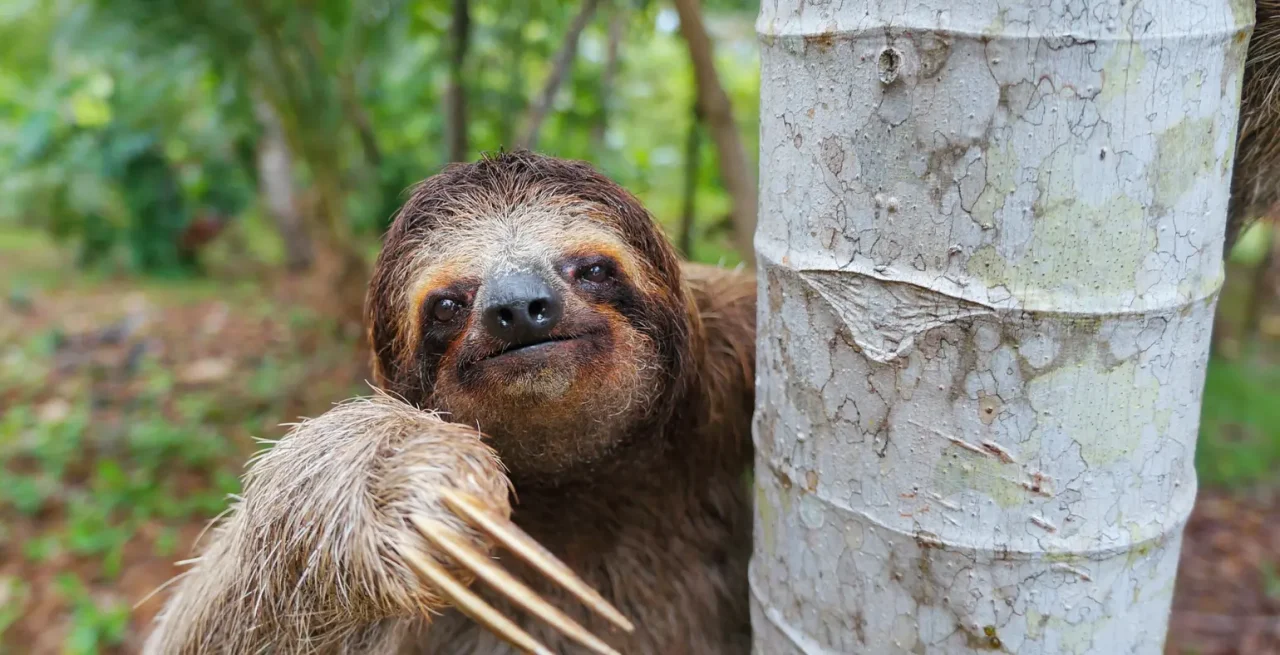
The brown-throated three-toed sloth is the most commonly seen sloth in Costa Rica. Look for tan to light brown fur with a distinctive dark mask across the face and three visible claws on each foreleg. They’re diurnal active during the day which makes them the easier species to spot. They favor lowland rainforests and coastal areas, and have a strong preference for cecropia trees.
The pale-throated three-toed sloth is less common and appears in more limited regions, with noticeably paler coloring on the throat and chest.
Two-Toed Sloths
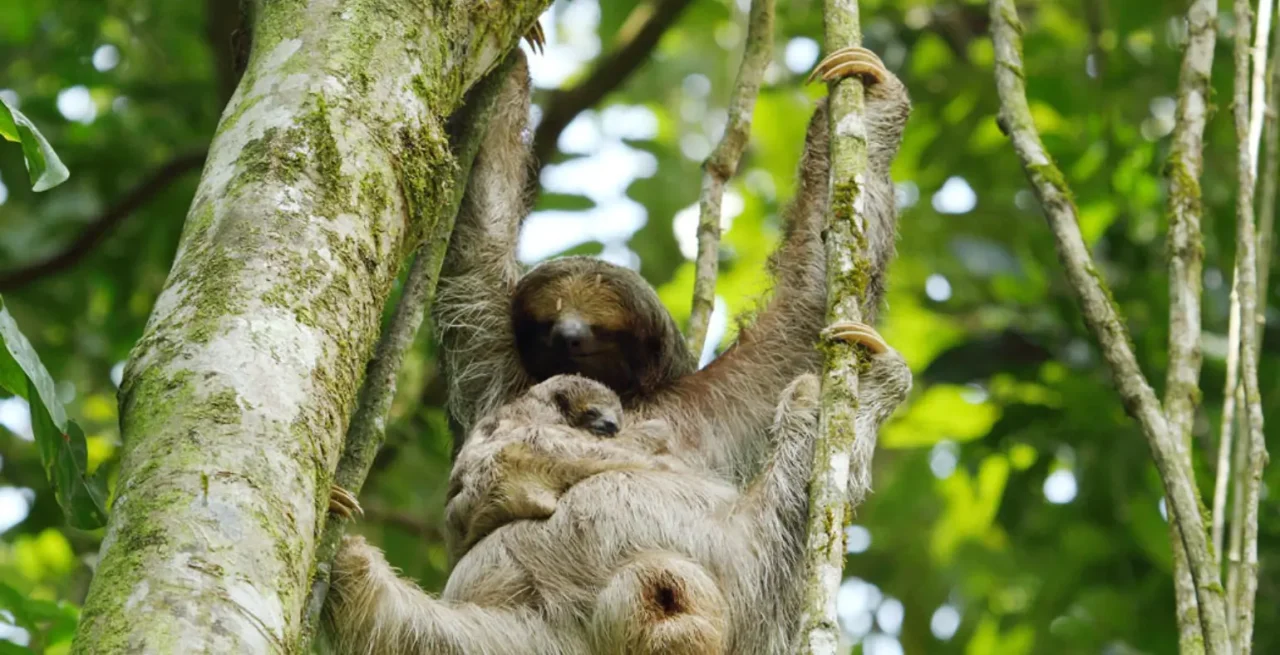
Hoffmann’s two-toed sloth is the only two-toed species found in Costa Rica. They’re generally larger than three-toed sloths with a broader, rounder face and fur that ranges from light brown to near black. Unlike three-toed sloths, two-toed sloths are mostly nocturnal which is why they’re harder to find on a daytime walk. They’re found in both lowland and montane rainforests across the country. A night wildlife tour significantly increases your chances of seeing one.
Best Places to See Sloths in Costa Rica
These four parks and regions consistently produce the most reliable sloth sightings in Costa Rica. Each offers a slightly different experience depending on your itinerary.
La Fortuna
La Fortuna is one of the most reliable places to see sloths in Costa Rica. The rainforests surrounding the town particularly along the roads toward Arenal Volcano are home to both species, and sloths are commonly spotted hanging in cecropia trees close to the roadside, making them easier to see than deep in the jungle. Guided nature walks and dedicated sloth tours are available year-round out of La Fortuna, with local guides trained to pick out the subtle outline of a sloth against the canopy from impressive distances.
If you’re joining a white water rafting trip on the Balsa or Sarapiquí rivers, keep an eye on the treetops during the calmer stretches sloth sightings along the riverbank are common and often the highlight of the day for guests who weren’t expecting them.
Manuel Antonio National Park
Manuel Antonio on the Pacific coast is one of Costa Rica’s most visited parks and one of the best for wildlife. The park’s compact trail system winds through dense lowland rainforest where both two-toed and three-toed sloths are regularly seen. Certified guides are available at the park entrance and dramatically improve your sighting rate; they know the most productive zones within the park and carry high-powered spotting scopes. Arrive early mornings before 9am are the best time to visit before the crowds arrive and wildlife retreats further into the canopy.
Tortuguero National Park
On the Caribbean coast, Tortuguero is best known for sea turtle nesting, but its canal network and undisturbed rainforest canopy are excellent for sloth spotting. Boat tours through the park’s waterways bring you directly beneath the treetops, giving you a low-angle view that makes it easier to spot sloths hanging overhead. Because the vegetation here is thick and the park sees fewer day visitors than Pacific parks, sloths tend to be less habituated to people a knowledgeable guide is especially worthwhile here.
Cahuita National Park
Cahuita National Park, also on the Caribbean coast, offers a relaxed self-guided wildlife experience along a coastal trail that passes beneath tall canopy trees. Sloths are frequently seen here, and because the park sees fewer visitors than Manuel Antonio or La Fortuna, the trails are quieter which makes for better wildlife observation overall. Walk slowly, scan the mid-canopy and upper branches wherever trees cluster together, and give yourself plenty of time. Cahuita is also one of the few places where you can combine beach time and sloth spotting in the same morning.
Best Time to See Sloths in Costa Rica
Sloths are present in Costa Rica year-round, so there is no single “best season” for sightings. What matters more is time of day and species.
Time of day: Sloths are most active and most likely to be moving between trees in the early morning (6–9am) and late afternoon (4–6pm). During the midday heat, they curl up tight against a branch and become almost invisible against the canopy. If you’re joining a tour, choose one that departs early.
Species matters: Three-toed sloths are diurnal, meaning they’re active during daylight hours and are the most consistently visible species on a daytime walk. Two-toed sloths are largely nocturnal if seeing a two-toed sloth is important to you, book a night wildlife tour.
Dry season vs. rainy season: The dry season (December–April) tends to bring more visitors, meaning more guides and tour options. The rainy season (May–November) has fewer crowds and lush vegetation sloths are present either way, though dense foliage can make spotting slightly harder in the rainiest months.
Tips for Spotting Sloths in Costa Rica
- Look for the shape, not the animal. Sloths blend into the canopy almost perfectly. Train your eye to look for an unusual rounded mass or lump on a branch particularly where two branches meet, at vine tangles, or near the trunk of a cecropia tree.
- Learn to identify cecropia trees. Sloths eat cecropia leaves, so these trees are a preferred resting spot for three-toed sloths especially. They have large, distinctively lobed leaves and a pale, smooth trunk. Scan any cecropia you pass.
- Go out early. The first two hours of daylight are when sloths are most likely to be moving between trees. Once the sun is high, they lock into a position and barely move for hours.
- Hire a local guide. An experienced naturalist guide can spot a sloth at 30 meters that most visitors would walk right past. In La Fortuna and Manuel Antonio especially, a guide will double or triple your sighting rate.
- Bring binoculars. Sloths are usually high in the canopy. Even if you spot one with the naked eye, binoculars let you properly observe the animal including identifying the species by its facial markings and claw count.
- Move slowly and be quiet. Rushing through a trail almost guarantees you’ll miss sloths. Give yourself extra time at each location, pause frequently, and scan upward rather than straight ahead.
Visiting La Fortuna? Our guides on the Balsa River white water rafting and nature tours know exactly where to find sloths along the way. Contact us to plan your trip.